
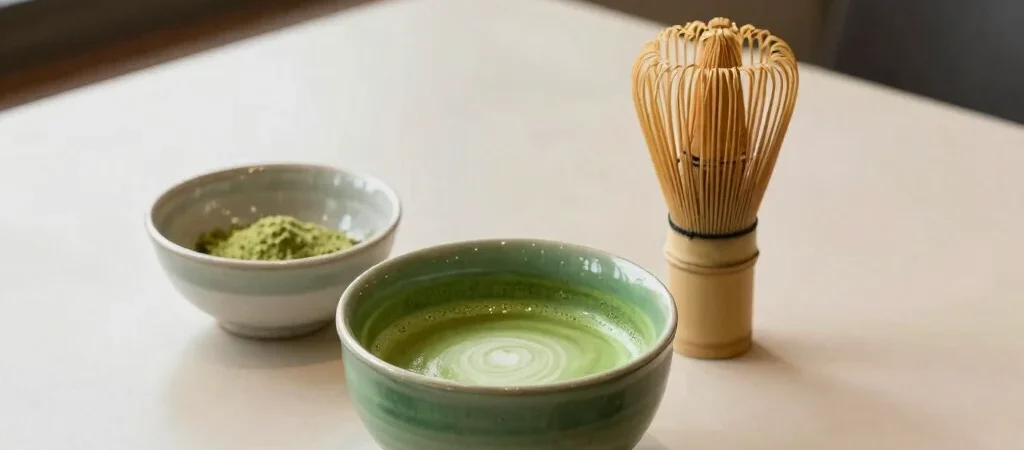
At a tasting table, someone takes a sip and asks, “Is it good?” It’s a fair question, but it skips the details that make a review helpful: how the matcha smells, what happens as it cools, and what the finish leaves behind. Slowing down gives the cup—and the conversation—more room.
Start With The Dry Leaf
Before whisking, notice the powder’s color and aroma without treating either as a verdict. Green tones can vary, and a vivid color alone can’t tell you whether a matcha will suit your palate. A clean bowl and a small amount of powder make it easier to notice the finer details.
Taste In More Than One Sip
Whisk the matcha with water that is hot but not boiling, then take a small sip while the foam is fresh. Look for the first impression—perhaps vegetal, creamy, or gently sweet—then check whether bitterness gathers as the cup cools. Water temperature, whisking, and personal preference all shape what you notice, so describe the preparation as well as the taste.
Use Words That Invite Conversation
Instead of calling a cup “smooth,” say what that means to you: little bitterness, a soft texture, or a finish that fades quickly. Another taster may read the same quality differently, and that difference is worth discussing rather than correcting. A useful review leaves room for someone else to taste for themselves.